
Introduction
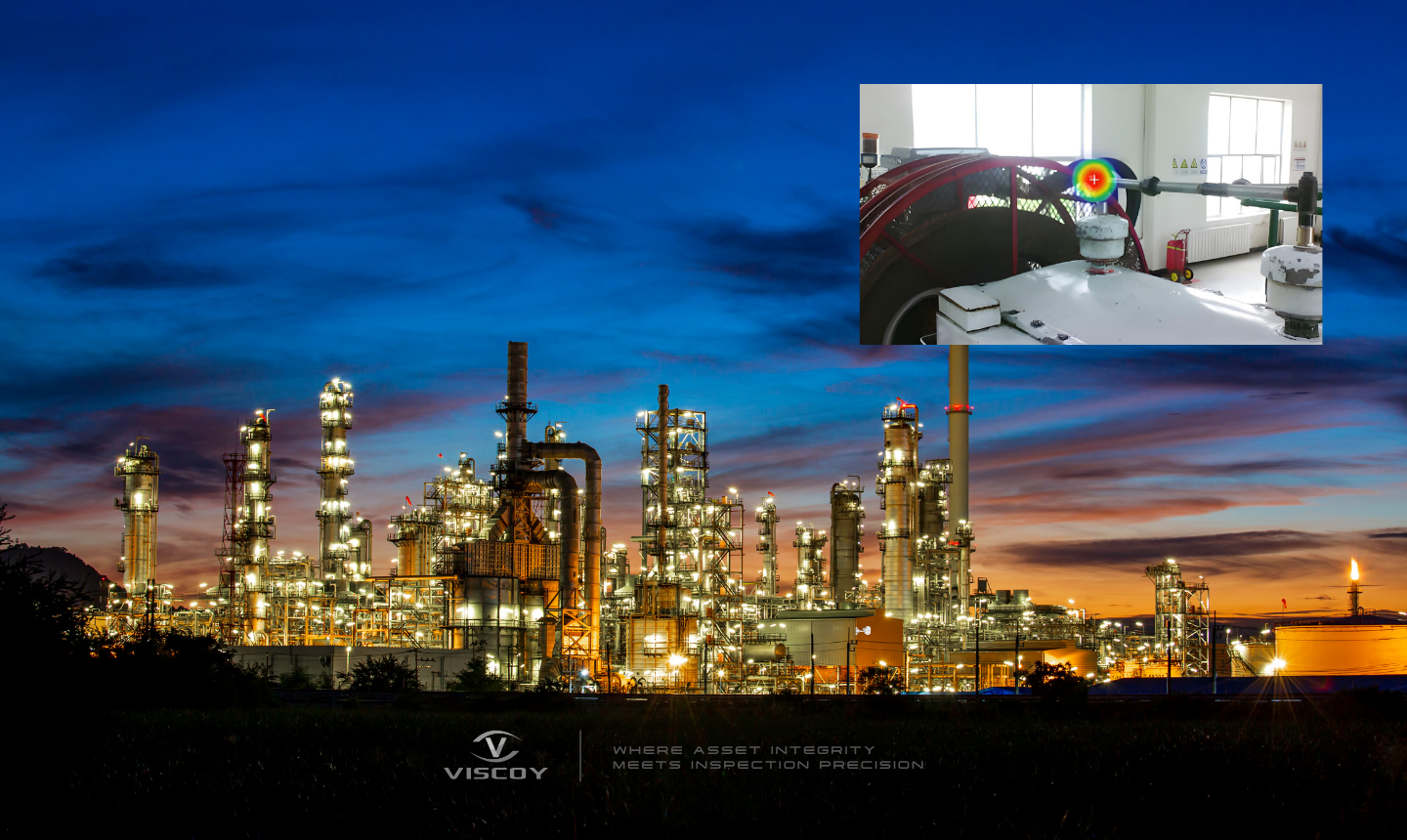
Methane and other process gases don’t announce themselves. Many are colourless and largely odourless in their raw form and can escape from a worn valve or a hairline seam without anyone noticing until an alarm goes off or until something ignites. For petrochemical plants in Singapore’s Jurong Island and wider industrial belt, invisibility is a problem. A slow gas leak wastes product, chips away at a facility’s environmental record, and sets the stage for a fire or explosion.
For years, the industry has leaned on a patchwork of tools to manage that risk: routine walk-arounds with handheld sniffers or acoustic cameras, fixed gas detectors bolted to key equipment, and periodic infrared surveys. While each product does something well, there is no product that does everything. Handheld checks depend on how often and how carefully someone walks the route. Fixed point detectors only see what’s right next to them. This is a familiar pain point for many operators in Singapore: leaks get found late, labour-intensive inspections, and pinpointing the actual source in a maze of pipes and valves can take real time and guesswork.
Looking to add continuous gas leak monitoring to your facility in Singapore? Get in touch with us today, we help petrochemical operators choose and deploy the right acoustic monitoring setup: https://viscoy.com/contact-us
A Fixed Acoustic Camera That Locates Leaks 24/7
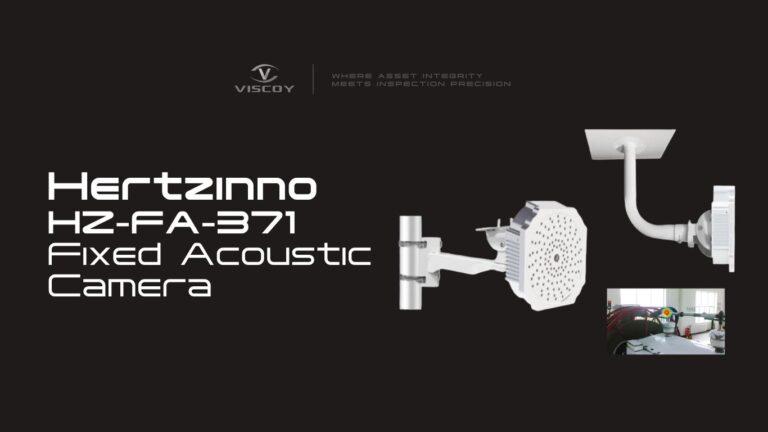
A newer category of equipment is designed to close that gap: Hertzinno HZ-FA-371, a fixed acoustic imaging camera built around a 128-channel MEMS microphone array for continuous, online gas leak monitoring. Rather than relying on an inspector to walk a route with a handheld acoustic camera, the HZ-FA-371 Fixed Acoustic Imaging Camera is mounted the way a security camera would be (on a wall, pole, or structure) and listens continuously for the ultrasonic hiss that a pressurised gas or compressed air leak makes.
The Hertzinno HZ-FA-371 Fixed Acoustic Imaging Camera does three things at once, on the same live view of the plant:
1) Locates the leak source — the microphone array uses beamforming to work out almost exactly where an ultrasonic leak signature is coming from, down to the fitting, flange, or seam, and overlays that location on a live video image
2) Estimates the leak rate — the system provides a leak-rate estimate so operators can gauge severity and prioritise a response
3) Monitors for partial discharge and mechanical faults — the same acoustic array also picks up corona, floating, and surface discharges in nearby high-voltage equipment, along with abnormal bearing noise or valve chatter, so one device covers several inspection needs
The Hertzinno HZ-FA-371 Fixed Acoustic Imaging Camera overlays all of this on a normal video feed, so an operator watching a monitor doesn’t need to interpret raw sensor data. Instead, they see a live picture of the equipment with the leak location marked directly on it. It’s built to withstand the hazardous-area environment it’s watching: Ex ib IIC T4 Gb / Ex ib IIIC T80°C Db explosion-proof rated, IP66/IP68 sealed against dust and moisture, and able to run in working temperatures from -20°C to 70°C. All of these are well within the range needed for Singapore’s outdoor tropical conditions.
How It Actually Gets Used
The HZ-FA-37 Fixed Acoustic Imaging Camera is designed to be installed much like an existing plant security camera: fixed to a wall, pole, or structure and pointed at the equipment that needs watching (i.e. tank farm, compressor pad, a stretch of pipe). It also supports robot-mounted inspection, so the same camera can be fitted to a patrol robot for mobile coverage across a wider site, in addition to fixed installation.
From there, it streams continuously: video, acoustic imaging, and leak-rate data are transmitted through Ethernet, HTTP, WebSocket, and RTSP, so the feed can be pulled straight into an existing plant monitoring platform or control room screen. When an acoustic reading crosses a threshold operators define, the system flags it, giving a control room the ability to monitor multiple zones from a handful of workstations rather than dispatching someone to check every corner. Because the data is continuous, trends in leak frequency or acoustic activity can also be reviewed later. This can be useful for planning maintenance before something actually fails, rather than reacting after it does.
Where It Fits in a Petrochemical Plant in Singapore
Because the HZ-FA-371 Fixed Acoustic Imaging Camera combines gas leak localisation, partial discharge detection, and mechanical fault monitoring in one device, it’s flexible enough to cover most of the areas where petrochemical operators in Singapore worry about gas leaks. Some of the most common deployment points include:
Area | Why it’s deployed there |
Storage tank farms | Continuous watch on pressure vessels and LPG tanks etc, so a slow seep at a valve or seam gets caught long before it becomes a bigger release |
Pipeline runs & connections | Monitors welds, flanges, and valve clusters along a line (spots most prone to corrosion or mechanical wear) for gas leaks |
Compressor & pump stations | Watches shaft seals on compressors and pumps, a common source of slow mechanical leaks |
Substations & switchgear rooms | The same acoustic array doubles up on partial discharge monitoring for nearby high-voltage equipment |
Data centre electrical rooms | Fixed acoustic monitoring for partial discharge in switchgear rooms, UPS areas, and power distribution rooms, relevant to Singapore’s growing data centre sector |
Why This Approach Makes Sense for Operators in Singapore
Acoustic leak detection and partial discharge monitoring have each existed separately for a while. Now, it’s putting them onto a fixed device that can cover a zone from a single mounting point and hand an operator a picture rather than a spreadsheet. Here are some practical benefits:
- Faster, more confident leak-finding — instead of a general “gas detected somewhere nearby” alert, staff get a specific location on a live video image
- Less reliance on manual rounds — a fixed camera on continuous watch can cover ground that used to require a person walking a route with a handheld sniffer
- One device, multiple use cases — the same 128-channel MEMS array covers gas leak localisation, partial discharge detection, and mechanical fault monitoring
- Platform-ready integration — Ethernet, HTTP, WebSocket, and RTSP support mean the camera can plug into existing plant monitoring systems in Singapore rather than requiring a standalone dashboard
- Rated for hazardous areas — Ex ib IIC T4 Gb / Ex ib IIIC T80°C Db certification and IP66/IP68 protection make it suitable for Zone 1 and Zone 2 areas common across Singapore’s oil & gas and petrochemical sites
Inspections, maintenance schedules, and trained personnel are still the foundation of good process safety practice. Using a fixed acoustic camera can detect a problem and source earlier, which is often the difference between a routine work order and an unplanned shutdown.
Conclusion
Gas leaks are a persistent, largely invisible risk in petrochemical operations, which can be costly in wasted product, environmental exposure, and worst-case safety outcomes. Our Hertzinno HZ-FA-371 Fixed Acoustic Imaging Camera gives plants in Singapore a practical way to close the gap between “a leak happened somewhere” and “here’s exactly where, and here’s what it looks like right now,” while doubling as a partial discharge and mechanical fault monitor for the same fixed installation.
Talk to VISCOY About Gas Leak Detection for Your Facility in Singapore
For facilities managing tank farms, pipeline networks, and process units, using a small number of HZ-FA-371 units can take over what used to take rounds of manual inspection. Contact our VISCOY team today to discuss whether our HZ-FA-371 Fixed Acoustic Imaging Camera or another model in Hertzinno’s acoustic camera range, fits your petrochemical plant’s gas leak detection needs in Singapore.