
Introduction
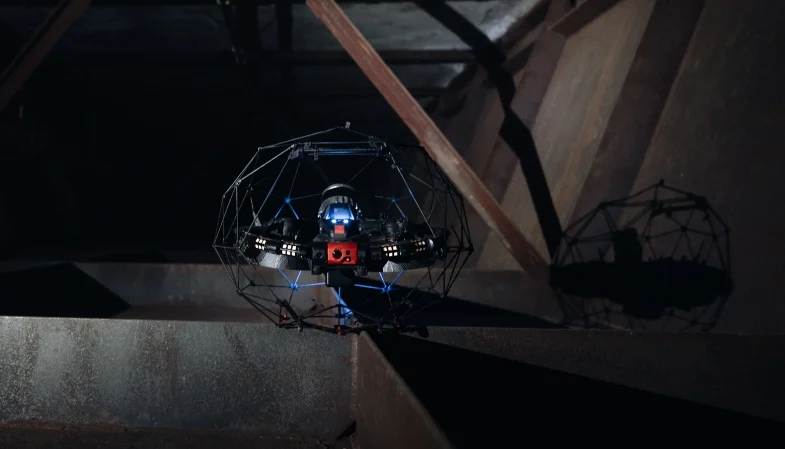
Singapore’s current built environment is ageing. Flatted factories, warehouses, commercial towers and civil structures built through the 1980s and 1990s are now well past the age at which regulators expect owners to actively verify structural condition. That verification is increasingly becoming an obligation that facility teams in Singapore are discharging with the help of confined space drones such as Flyability’s Elios 3 drone.
Our post walks through what the Periodic Structural Inspection (PSI) regime in Singapore actually requires, where confined spaces sit inside that requirement, why those spaces are dangerous to enter, and what are the changes (i.e. operationally and financially) when a collision-tolerant indoor drone does the inspection instead of a person on a rope.
Planning an upcoming PSI cycle and want to scope in drone-based confined space assessment? We work with facility teams and PE-appointed inspectors across Singapore, contact us today: https://www.viscoy.com/
The Regulatory Backdrop: Singapore’s PSI Requirement
Periodic Structural Inspection (PSI) is administered by the Building and Construction Authority (BCA) under Section 28 of the Building Control Act (Cap. 29). The regime exists to ensure that buildings remain structurally safe for their intended use as they age, and to catch deterioration, overloading or unauthorised alterations before they become genuine safety risks.
In brief, the framework talks about how:
- Buildings in Singapore become subject to PSI from their 13th year, counted from the date of Temporary Occupation Permit (TOP) or Certificate of Statutory Completion (CSC)
- Non-residential buildings (industrial, commercial and institutional) in Singapore are inspected every 5 years
- Residential buildings in Singapore are inspected every 10 years
- Inspection must be carried out by a Professional Engineer (Civil) registered with the Professional Engineers Board, who bears personal responsibility for the findings and submits a certified report to BCA
- Non-compliance is an offence under the Building Control Act, with penalties and enforcement action for owners who miss their inspection window
For industrial buildings in particular (i.e. flatted factories, warehouses, JTC-leased facilities and logistics hubs), the 5-year cycle means PSI in Singapore is a recurring, budgeted line item rather than a one-off event. Owners and MCSTs are expected to schedule proactively rather than wait for a BCA notice.
This is where the scope becomes operationally difficult. A PSI is not a walk-through of lobbies and car parks. The appointed Professional Engineer (PE) is expected to assess the structural elements that actually carry load and show early signs of distress. Part or whole of these elements are at times concealed in areas that were never designed with human access (e.g. roof trusses, service and ceiling voids, plenum spaces, lift shafts, etc, such as confined spaces or locations at height. BCA itself has been encouraging the use of drones, 3D scanning and structural health monitoring to supplement traditional visual inspection, precisely because so much of a building’s structure sits in places people cannot easily or safely reach.
Where Confined Spaces Enter the Picture
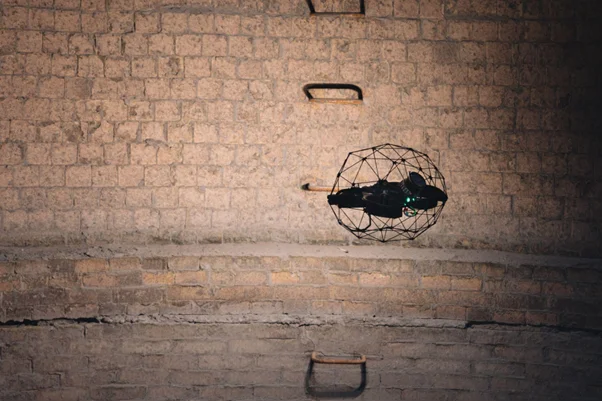
A meaningful share of the structural elements a PE needs to assess sit inside confined spaces: enclosed or partially enclosed areas not designed for continuous human occupancy, with restricted entry and exit, and often, poor natural ventilation. In a typical building or industrial facility in Singapore, that includes:
- Cooling towers and chiller plant enclosures
- Basements, crawl spaces and service voids beneath raised floors
- Ceiling voids and roof truss cavities above false ceilings
- Culverts, box drains and stormwater structures
- Lift shafts, refuse chutes and vertical risers
- Under jetties and docks
Every of these is a location for the kind of corrosion, structural cracks, concrete spalling or unauthorised modification that a PSI is designed to flag. Also, every one of them is a space where a PE historically could only assess by physically entering.
Why Confined Spaces Are Hazardous to Enter
Confined space entry is one of the most tightly regulated activities in Singapore’s industrial and building safety, because the failure modes are severe and fast-moving. The core hazards a PE, technician or inspector faces when entering these spaces for a structural assessment include:
- Oxygen deficiency or enrichment — poorly ventilated tanks, sumps and shafts can have altered atmospheres that cause unconsciousness within minutes
- Toxic or flammable gas accumulation — stagnant water, decomposing organic matter or residual process chemicals can release hydrogen sulphide, methane or other hazardous gases
- Engulfment — loose granular material in silos and hoppers, or rising water in tanks and culverts, can trap or bury an entrant
- Restricted entry and egress — narrow hatches, ladders and shafts slow evacuation and complicate rescue if something goes wrong
- Work at height inside the space itself — many confined spaces (like cooling towers, tank interiors, lift shafts) are also fall-hazard environments once a person is inside
- Structural uncertainty — the very defects the inspection is trying to find (corroded gratings, degraded platforms, cracked slabs) can compromise the safety of the person sent in to look for them
Because of these risks, confined space entry under Singapore’s Workplace Safety and Health (WSH) requirements demands a permit-to-work system, atmospheric testing, ventilation, a dedicated attendant, and rescue arrangements before a single person goes in and this is before any actual inspection work begins.
How Flyability’s Elios 3 Drone Changes the Equation
The Elios 3 drone was built specifically for this problem: a collision-tolerant indoor drone, protected by a cage, designed to fly into confined and hard-to-reach spaces without a human following it in. For a PSI-driven inspection in Singapore, that capability maps directly onto the pain points above.
- The cage lets the drone bump, scrape and rebound off structural surfaces without loss of control. This is something essential in a tank, duct or shaft where clean flight lines don’t exist.
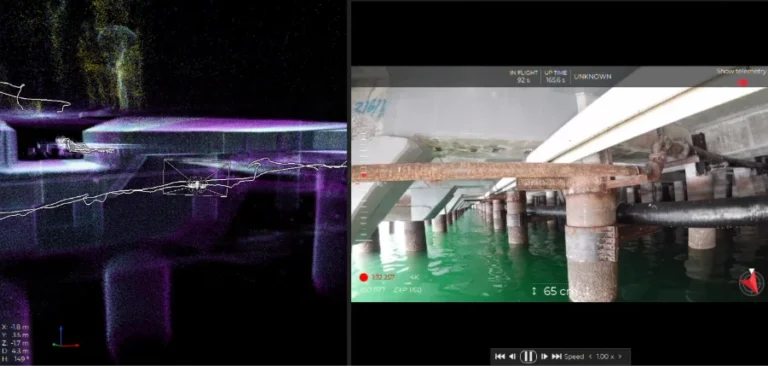
- LiDAR-based SLAM navigation and FlyAware mapping let the pilot fly beyond line of sight inside large or visually featureless structures and produce a 3D point cloud of the space afterward.
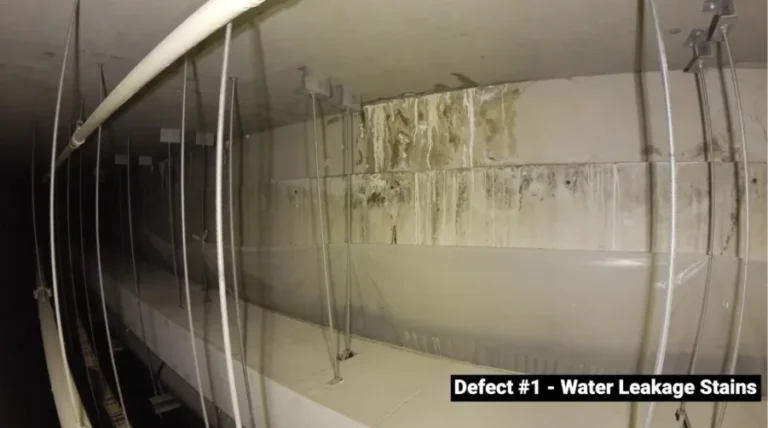
- 4K visual and thermal payload options give the PE the same visual evidence a physical walk-down would produce (i.e. corrosion, structural cracks, concrete spalling, water ingress) without exposing anyone to the space itself.
- The entire flight can be reviewed frame by frame post-inspection. The PE can revisit any detail without a second entry.
Because the drone, not a person, crosses the threshold into the hazardous atmosphere, the confined space entry permit requirements are often reduced to atmospheric testing and ventilation. Hence the rigging, attendant crew and rescue standby built around a human entrant are frequently no longer needed for the visual assessment itself.
Productivity Gains: Manual Inspection vs. the Elios 3 Drone
The clearest way to see the operational impact is side by side. The comparison below reflects typical differences reported for structural and asset inspections of tanks, stacks, cooling towers and similar confined structures.
Inspection Factor | Manual / Rope Access Entry | Flyability Elios 3 |
Access preparation | Permit-to-work, gas testing, scaffolding or rope rigging, standby/attendant crew | Permit-to-work and gas testing only; no rigging or scaffold required |
Personnel on site | Typically 3–5 (entrant, attendant, supervisor, rescue standby) | Typically 1–2 (pilot and observer) |
Asset downtime | Often requires full or partial shutdown, purging and cooling before entry | Shutdown often reduced or avoided; flights possible soon after purging |
Human exposure to hazard | Direct exposure to atmospheric, engulfment and fall hazards | No personnel enter the space; pilot operates from outside |
Coverage of the space | Limited to areas accessible by rope, ladder or platform | Full volumetric access, including voids above walkways and behind obstructions |
Data output | Handwritten notes, still photos where reachable | 4K video, high-resolution stills, thermal imagery and LiDAR point clouds |
Typical inspection duration | Half a day to several days, depending on rigging complexity | Often under an hour of flight time per structure |
Note: Actual figures vary by structure type, access complexity and site conditions.
The pattern across these factors is consistent: the Elios 3 drone does not just make inspection safer, it compresses the entire workflow. A PSI inspection covering multiple tanks, shafts and voids across a facility in Singapore can move from a multi-day, multi-crew engagement to a matter of hours, with a full digital record attached to the PE’s report rather than a set of field notes.
Hard-to-Reach Areas and Work-at-Height Examples
A few concrete scenarios illustrate where this matters most for a PSI in Singapore:
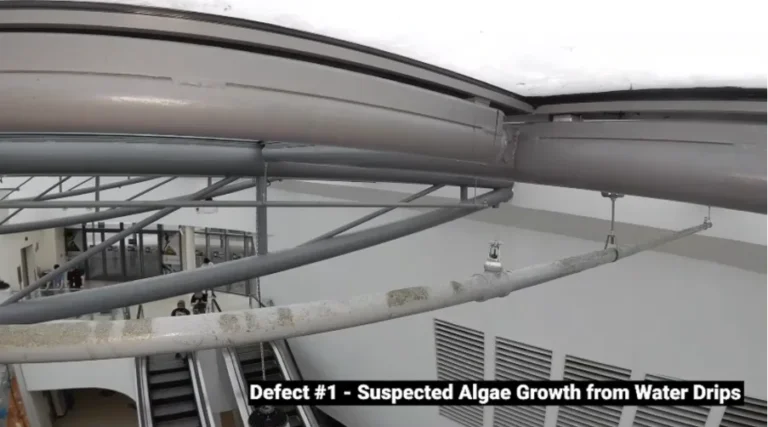
- Roof truss voids and ceiling cavities — corrosion or timber decay above a false ceiling, an area rarely inspected in full precisely because reaching it means opening ceiling panels and working above head height throughout
- Elevated plant room voids and risers — vertical service risers running the height of a building, previously assessed only at accessible floors
- Culverts and box drains — long horizontal structures with restricted headroom, historically walked or crawled by an inspector with a torch
- Under jetties and docks – locations where structures are exposed to corrosive sea water. Historically inspected by inspectors on small boats.
In each case, the productivity gain is about time saved on the day of inspection and the parts of the structure that finally get properly assessed at all, rather than sampled from the nearest safe vantage point.
Bringing This Into Your PSI Inspection
For building owners, MCSTs and facility engineers working through Singapore’s 5-year and 10-year PSI cycles, the question is: how to get complete, defensible visual evidence out of tanks, shafts, stacks and voids without exposing personnel to entirely preventable hazards, and without the inspection itself becoming the most expensive and time-consuming part of the maintenance budget.
Flyability’s Elios 3 drone, deployed by an experienced operator ahead of or alongside the appointed PE’s assessment, gives that evidence in a form the PE can review, archive and reference directly in the statutory PSI report, while keeping people out of the spaces that are hardest, and most dangerous, to reach.
To discuss an Elios 3 drone deployment for your upcoming periodic structural inspection in Singapore, get in touch with our VISCOY team today: https://viscoy.com/contact-us